New national survey data released this summer shows consumer awareness of regenerative agriculture more than tripled over the past three years — and the reason people are buying regeneratively grown food has quietly shifted. It’s no longer primarily about the planet. It’s about what’s in the food.
Nutrient density now ranks as a top grocery-buying priority for roughly three in ten American shoppers. Nearly three-quarters of consumers who choose regenerative products say they’re doing it for personal health benefits; less than a third cite environmental reasons as their main driver. And price resistance is low — most people surveyed weren’t put off by paying more for food they believed was more nutrient-rich.
That’s a meaningful shift for anyone growing, processing, or serving food. The story consumers are responding to isn’t “better for the planet.” It’s “better for me” — and that story starts in the soil.
The part of the story most operations skip
Nutrient density isn’t manufactured at the retail shelf or in a marketing deck. It’s a function of what’s actually in the ground a crop is grown in, or the pasture an animal grazes. Depleted, synthetic-input-dependent soil produces food with a different nutritional profile than soil with active biology and a steady supply of organic matter.
Here’s the gap: a lot of operations that want to tell a nutrient-density story are still sending the organic material that could rebuild that soil — food scraps, crop residue, spoiled inventory, prunings — off-site to a landfill or a municipal facility, then buying in amendments to compensate. The nutrients leave the property and get repurchased somewhere else, at a cost, with a delay.
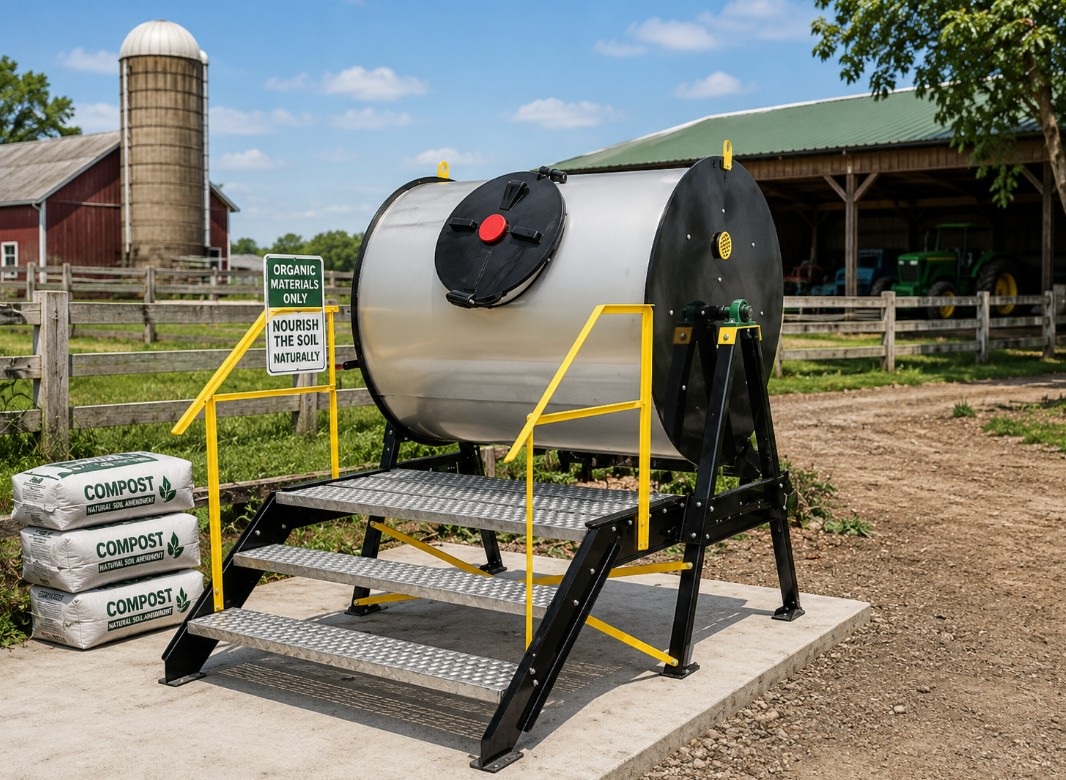
On-site in-vessel composting closes that gap directly. Organic waste generated on the property gets processed on the property and returned to the same soil it came from, week over week, without depending on judgment calls about pile turning or weather windows. For farms, greenhouses, and hospitality operations building a nutrient-density story that has to hold up to a customer’s follow-up question, that’s the difference between a claim and a demonstrated practice.
Why this matters beyond the marketing angle
Consumer skepticism is rising alongside awareness. The same research found that two-thirds of shoppers say food labels confuse them, even as six in ten read those labels regularly. Vague claims — “natural,” “sustainably grown,” “farm fresh” — are losing their pull precisely because they can’t be traced to anything specific.
A nutrient-density story backed by an on-site recovery process is traceable. It’s a claim with a mechanism behind it: organic matter recovered here, processed here, returned here. That’s a much harder story to dismiss as marketing language, and it’s the kind of claim that survives the scrutiny this year’s greenwashing settlements have made standard practice across the food industry.
Whatever your operation’s size, the demand signal is the same: people are willing to pay for food they believe is more nutritionally alive. The operations positioned to meet that demand credibly are the ones that can point to what’s happening in their own soil — not just what’s printed on the package.
NutrientReturn helps farms, greenhouses, and hospitality operations turn organic waste streams into on-site nutrient recovery. Funding programs that cover composting equipment — many at 100% for schools — are listed in our Grant Finder. Questions about whether in-vessel composting fits your operation? Get in touch.
Ready to close the nutrient loop?
Tell us about your operation and we'll run the numbers — free, no obligation.
Get a Quote