Golf has an image problem, and it isn’t going away by itself.
Every summer brings another round of coverage on the herbicides, pesticides, and synthetic fertilizers it takes to keep 150 acres of turf tournament-green from May through October. Some of that scrutiny is fair. Some of it overstates the case. Either way, superintendents don’t set the narrative — public perception does, and right now the narrative is “golf courses are chemically intensive by nature.”
That framing usually goes unanswered, because the industry’s response tends to live in the ground — better turf science, reduced-input programs, certifications most members will never read. All true, all worth doing, and all invisible to the people forming an opinion about your club.
There’s a second half of the operation that almost never enters that conversation: the kitchen.
The waste stream nobody’s counting
A mid-size private or semi-private club running a full-service dining room isn’t a small food operation. A weekday lunch-and-dinner service for 100 covers, scaled up to 250 on a weekend, puts a club close to 1,000 pounds of food and plant waste in an average week — before a single event is booked. Add one wedding at 200 guests, and a club can clear that number from the reception alone.
Right now, that volume goes one place: out with the regular waste haul, at regular hauling rates, doing nothing for the property.
The reframe
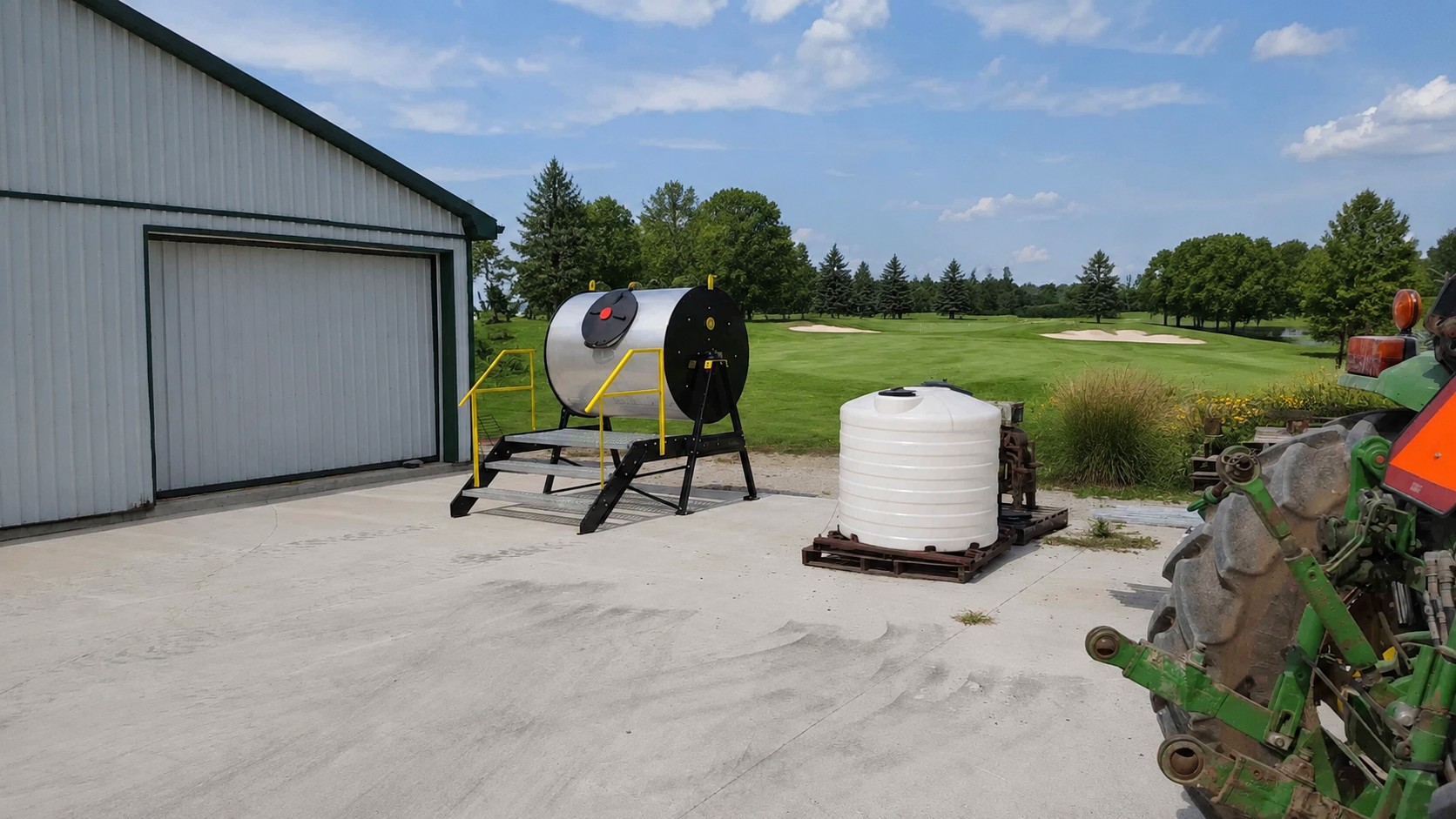
A club that processes even a portion of that volume on site isn’t just cutting a waste bill — it’s producing something. In-vessel composting turns dining room and event waste into finished compost in weeks, not months, without the odor, pests, or slow breakdown of an open pile. That output can go back into ornamental beds, tee boxes, or nursery stock on the property — inputs the club would otherwise be buying.
That’s the part worth saying publicly. “We reduce chemical inputs where we can, and we produce some of our own soil amendment on site from our own kitchen waste” is a materially different sentence than anything turf management alone can offer. It doesn’t erase the herbicide conversation. It gives the club something concrete to put next to it — visible, explainable, and true, rather than another line in a sustainability policy nobody reads.
What it actually takes
This isn’t a retrofit project. A single in-vessel unit sized for club volume runs about $9,500, requires no power hookup, and fits in the service yard near the kitchen or maintenance building most clubs already have. The equipment does the processing; it still needs someone who owns it — a GM, food and beverage director, or ops lead who checks it, feeds it, and can speak to it when a member or board member asks. Without that person, it’s an expensive bin. With that person, it’s a five-minute answer to a question your club currently doesn’t have one for.
For a property already fielding questions about chemical use, that’s not a marginal upgrade. It’s the other half of the story you haven’t been telling.
Ready to close the nutrient loop?
Tell us about your operation and we'll run the numbers — free, no obligation.
Get a Quote