Category: Industry

  • The Compost You’re Buying Is Sitting in Your Own Cull Bin

    The Compost You’re Buying Is Sitting in Your Own Cull Bin

    Ask a peony, dahlia, or ranunculus grower what their biggest input cost is, and soil amendment is almost always somewhere near the top of the list. These aren’t row crops grown on volume and thin margins per acre — they’re intensive, high-value beds that get rebuilt and re-amended constantly, sometimes multiple times in a single season.

    That means most specialty cut flower operations are buying compost regularly. Delivered bulk compost commonly runs somewhere in the $15–$25 per cubic yard range before delivery, and a 3–4 inch layer worked into a bed before planting — the standard practice among serious growers — adds up fast across even a modest number of beds, repeated every time a bed turns over.

    At the same time, the same operation is producing exactly the raw material that compost is made from — and paying to get rid of it.

    The waste that’s already sitting there

    Every growing season leaves a specialty flower farm with a steady stream of organic material: rejected stems that don’t meet cut-quality standards, spent blooms, foliage trimmed for stem length, and end-of-season plant material pulled at bed turnover. For crops like dahlias and ranunculus, where a meaningful share of what’s grown never makes it to a bucket, that cull volume isn’t a rounding error — it’s a real percentage of total plant mass grown in a season.

    Right now, on most farms, that material either gets hauled off, left to break down slowly and unevenly in a corner of the property, or composted the slow way — an open pile that takes months, needs turning, and doesn’t reliably hit the temperatures needed to kill weed seeds and pathogens before it goes back on a production bed.

    The reframe: you’re not disposing of waste, you’re skipping a step

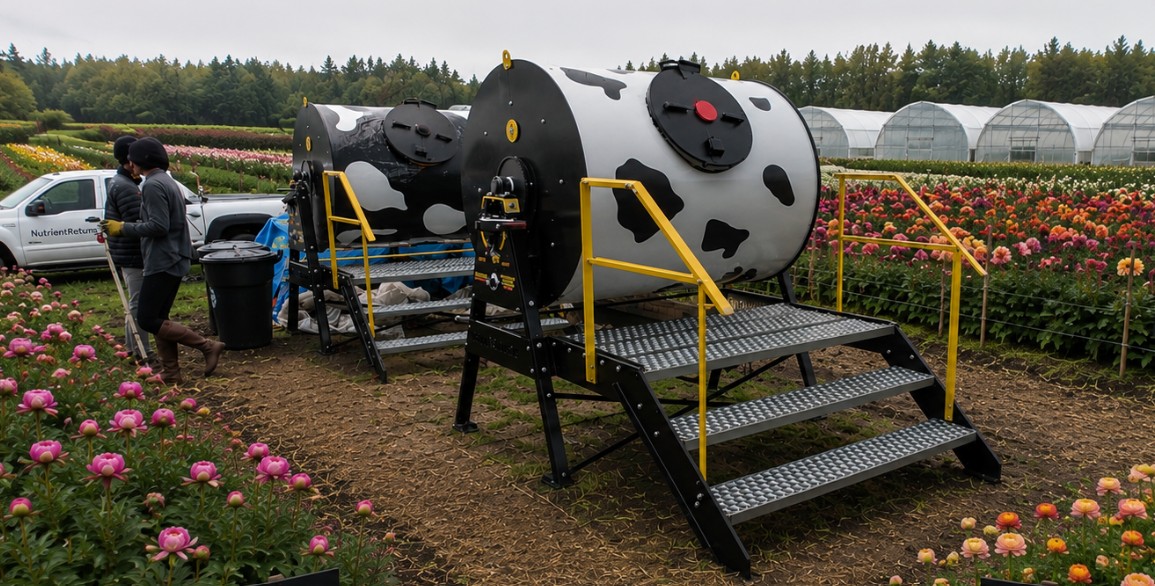
    The input you’re buying and the output you’re throwing away are the same material, on either end of a process you’re not running. An in-vessel composter closes that loop on-site — turning cull stems, spent blooms, and bed-turnover material into finished, weed-seed-safe compost in weeks rather than months, without the space, smell, or inconsistency of an open pile.

    For an operation already spending real money on delivered compost every season, that’s not a sustainability talking point. It’s a direct line item that gets smaller — potentially close to zero for compost inputs — the more of your own cull volume you’re able to process and put back into your own beds.

    Why this vertical is different to sell into

    Most operations that buy the Batch 45 need to find an internal champion — someone who’ll own the equipment day to day so it doesn’t become an expensive bin nobody uses. Specialty cut flower farms are often the exception. On a lot of these operations, the grower who decides what goes into the soil is the same person who’ll be running the composter. There’s no internal handoff required, no one else to convince. The person who feels the cost of buying compost every season is the same person who’d feel the benefit of not having to.

    What it takes

    A single Batch 45 unit runs $9,500, needs no power hookup, and processes material in a footprint that fits next to an existing outbuilding or greenhouse. For a farm already running a tight input budget on a small number of intensive beds, the math isn’t abstract — it’s the difference between paying for compost every season and producing it.
  • Your Clubhouse Kitchen Could Help Answer the Herbicide Question

    Your Clubhouse Kitchen Could Help Answer the Herbicide Question

    Golf has an image problem, and it isn’t going away by itself.

    Every summer brings another round of coverage on the herbicides, pesticides, and synthetic fertilizers it takes to keep 150 acres of turf tournament-green from May through October. Some of that scrutiny is fair. Some of it overstates the case. Either way, superintendents don’t set the narrative — public perception does, and right now the narrative is “golf courses are chemically intensive by nature.”

    That framing usually goes unanswered, because the industry’s response tends to live in the ground — better turf science, reduced-input programs, certifications most members will never read. All true, all worth doing, and all invisible to the people forming an opinion about your club.

    There’s a second half of the operation that almost never enters that conversation: the kitchen.

    The waste stream nobody’s counting

    A mid-size private or semi-private club running a full-service dining room isn’t a small food operation. A weekday lunch-and-dinner service for 100 covers, scaled up to 250 on a weekend, puts a club close to 1,000 pounds of food and plant waste in an average week — before a single event is booked. Add one wedding at 200 guests, and a club can clear that number from the reception alone.

    Right now, that volume goes one place: out with the regular waste haul, at regular hauling rates, doing nothing for the property.

    The reframe

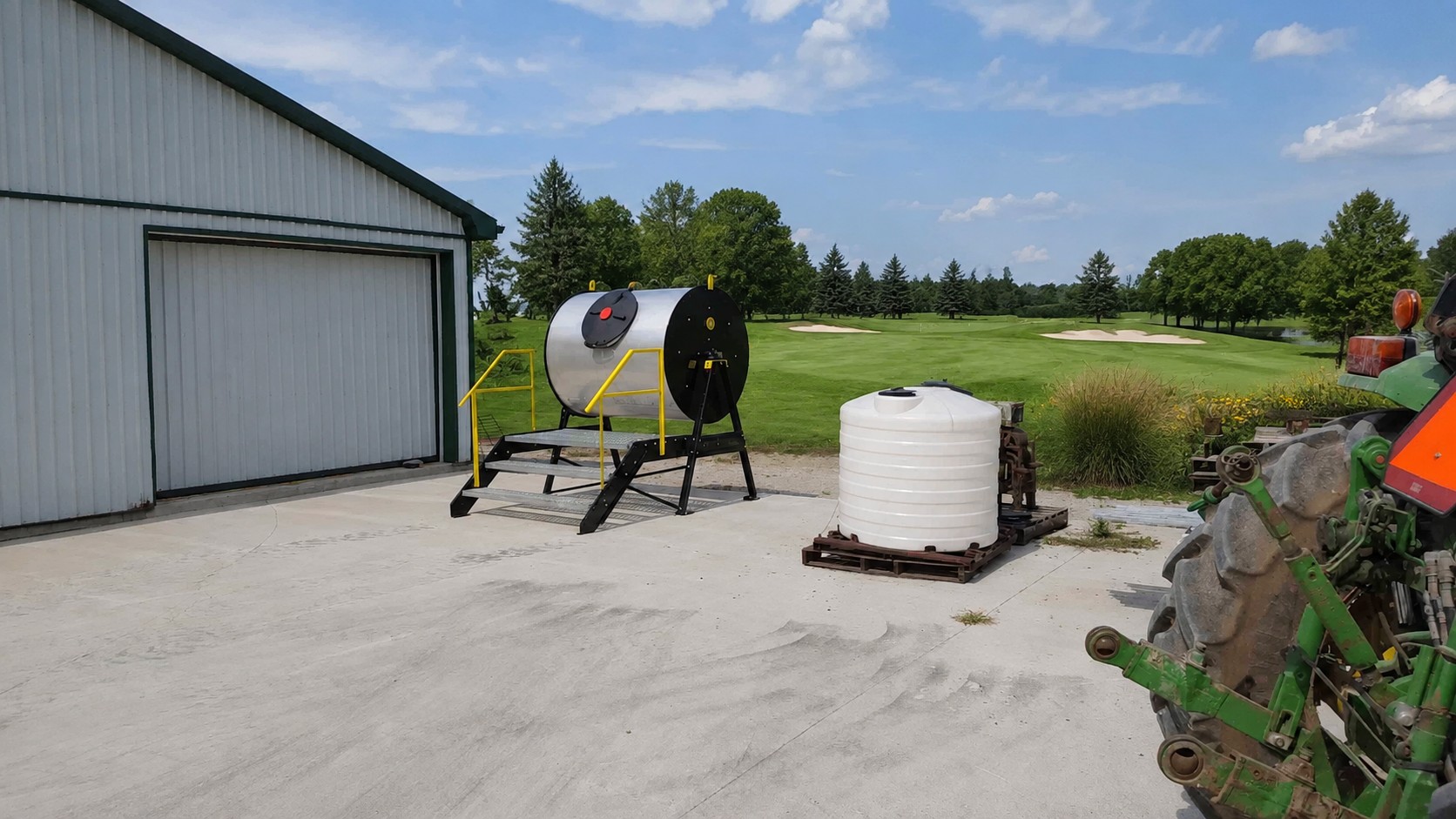
    A club that processes even a portion of that volume on site isn’t just cutting a waste bill — it’s producing something. In-vessel composting turns dining room and event waste into finished compost in weeks, not months, without the odor, pests, or slow breakdown of an open pile. That output can go back into ornamental beds, tee boxes, or nursery stock on the property — inputs the club would otherwise be buying.

    That’s the part worth saying publicly. “We reduce chemical inputs where we can, and we produce some of our own soil amendment on site from our own kitchen waste” is a materially different sentence than anything turf management alone can offer. It doesn’t erase the herbicide conversation. It gives the club something concrete to put next to it — visible, explainable, and true, rather than another line in a sustainability policy nobody reads.

    What it actually takes

    This isn’t a retrofit project. A single in-vessel unit sized for club volume runs about $9,500, requires no power hookup, and fits in the service yard near the kitchen or maintenance building most clubs already have. The equipment does the processing; it still needs someone who owns it — a GM, food and beverage director, or ops lead who checks it, feeds it, and can speak to it when a member or board member asks. Without that person, it’s an expensive bin. With that person, it’s a five-minute answer to a question your club currently doesn’t have one for.

    For a property already fielding questions about chemical use, that’s not a marginal upgrade. It’s the other half of the story you haven’t been telling.