Category: Uncategorized

  • One Worksheet Wasn’t Enough. Here’s the Whole Composting Unit for Grades 3โ€“6.

    One Worksheet Wasn’t Enough. Here’s the Whole Composting Unit for Grades 3โ€“6.

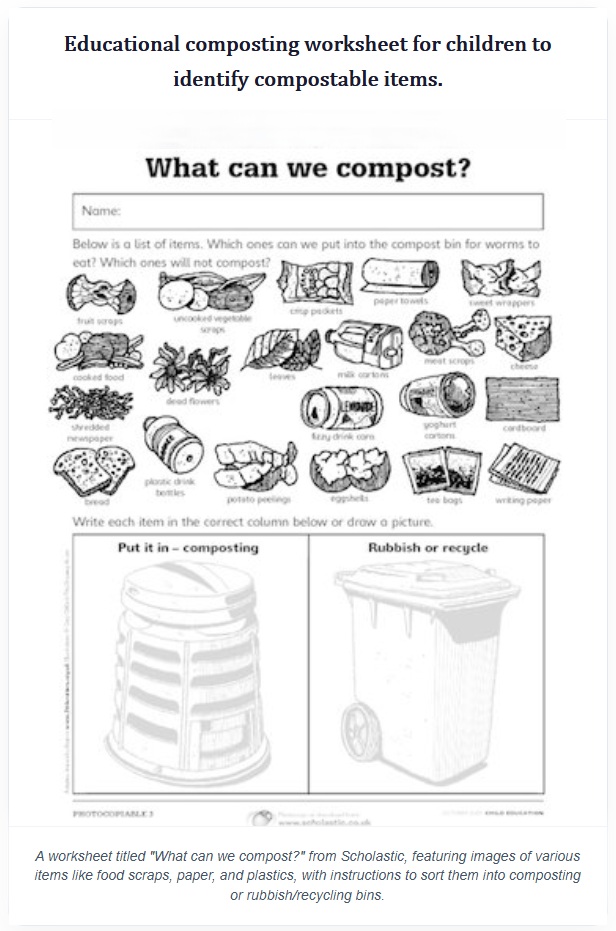
    Composting is one of the few environmental concepts kids can actually watch happen. It doesn’t need a diagram of a process they’ll never see โ€” it needs a bin, some scraps, and a few weeks. Back in July we published a single worksheet, “Can It Compost?”, to give teachers a quick way to start that conversation. It turned out one worksheet only covers the first five minutes of the lesson.

    So we built the rest of it.

    What’s in the series

    The Nutrient Loop is a free, five-part worksheet series for grades 3โ€“6 that walks students from “does this go in the bin?” all the way through the science of how nutrients actually cycle back into soil.

    • Can It Compost? โ€” Students sort everyday items into compost vs. trash and recycling, with an illustrated item bank and a “did you know” fact on food waste.
    • Meet the Decomposers โ€” A matching activity pairing earthworms, fungi, bacteria, and other decomposers with the specific job each one does.
    • From Scraps to Soil โ€” Students put the five stages of decomposition in order and chart the heat curve a working compost system moves through.
    • Build a Backyard Compost Bin โ€” A hands-on activity sorting “browns” and “greens,” then labeling a bin cross-section with the right layering, moisture, and airflow.
    • Composting Myths: True or False? โ€” A ten-question quiz that clears up the most common misconceptions kids (and adults) have about composting.

    Each sheet stands alone, so a teacher can pull just one for a single lesson, or work through all five as a short unit.

    Why worksheets instead of a lecture

    Nutrient recovery is easiest to teach as something students can trace step by step: what goes in, what breaks it down, what comes out the other side. The carbon-to-nitrogen balance that makes a compost system work โ€” the same “browns and greens” ratio we cover on the equipment side of our business โ€” is something a 9-year-old can sort into two piles with their hands before they ever see it written as a ratio. That’s the gap this series is built to close, and it fits naturally alongside science, environmental studies, and math curricula.

    Free for classroom use โ€” no equipment required

    These worksheets aren’t tied to owning any particular composting system. Any classroom, homeschool group, or nature program can print and use them, whether or not composting is already happening on-site. If your school is further along and thinking about a hands-on, no-electricity composting system that students can actually operate, we covered that in Your Classroom Could Be Closing the Nutrient Loop. Here’s How.

    Download the series

    The full packet โ€” a cover page plus all five worksheets โ€” is available as one download, or grab individual sheets below.

    Know a teacher, district sustainability coordinator, or homeschool parent who’d use this? Pass it along.

  • Consumers Now Buy for Nutrient Density.  That Demand Starts in the Soil.

    Consumers Now Buy for Nutrient Density. That Demand Starts in the Soil.

    New national survey data released this summer shows consumer awareness of regenerative agriculture more than tripled over the past three years โ€” and the reason people are buying regeneratively grown food has quietly shifted. It’s no longer primarily about the planet. It’s about what’s in the food.

    Nutrient density now ranks as a top grocery-buying priority for roughly three in ten American shoppers. Nearly three-quarters of consumers who choose regenerative products say they’re doing it for personal health benefits; less than a third cite environmental reasons as their main driver. And price resistance is low โ€” most people surveyed weren’t put off by paying more for food they believed was more nutrient-rich.

    That’s a meaningful shift for anyone growing, processing, or serving food. The story consumers are responding to isn’t “better for the planet.” It’s “better for me” โ€” and that story starts in the soil.

    The part of the story most operations skip

    Nutrient density isn’t manufactured at the retail shelf or in a marketing deck. It’s a function of what’s actually in the ground a crop is grown in, or the pasture an animal grazes. Depleted, synthetic-input-dependent soil produces food with a different nutritional profile than soil with active biology and a steady supply of organic matter.

    Here’s the gap: a lot of operations that want to tell a nutrient-density story are still sending the organic material that could rebuild that soil โ€” food scraps, crop residue, spoiled inventory, prunings โ€” off-site to a landfill or a municipal facility, then buying in amendments to compensate. The nutrients leave the property and get repurchased somewhere else, at a cost, with a delay.

    On-site in-vessel composting closes that gap directly. Organic waste generated on the property gets processed on the property and returned to the same soil it came from, week over week, without depending on judgment calls about pile turning or weather windows. For farms, greenhouses, and hospitality operations building a nutrient-density story that has to hold up to a customer’s follow-up question, that’s the difference between a claim and a demonstrated practice.

    Why this matters beyond the marketing angle

    Consumer skepticism is rising alongside awareness. The same research found that two-thirds of shoppers say food labels confuse them, even as six in ten read those labels regularly. Vague claims โ€” “natural,” “sustainably grown,” “farm fresh” โ€” are losing their pull precisely because they can’t be traced to anything specific.

    A nutrient-density story backed by an on-site recovery process is traceable. It’s a claim with a mechanism behind it: organic matter recovered here, processed here, returned here. That’s a much harder story to dismiss as marketing language, and it’s the kind of claim that survives the scrutiny this year’s greenwashing settlements have made standard practice across the food industry.

    Whatever your operation’s size, the demand signal is the same: people are willing to pay for food they believe is more nutritionally alive. The operations positioned to meet that demand credibly are the ones that can point to what’s happening in their own soil โ€” not just what’s printed on the package.


    NutrientReturn helps farms, greenhouses, and hospitality operations turn organic waste streams into on-site nutrient recovery. Funding programs that cover composting equipment โ€” many at 100% for schools โ€” are listed in our Grant Finder. Questions about whether in-vessel composting fits your operation? Get in touch.

  • Your Classroom Could Be Closing the Nutrient Loop. Here’s How.

    Your Classroom Could Be Closing the Nutrient Loop. Here’s How.

    For educators who want their students to understand where food comes from โ€” and where it goes.


    Every September, science teachers across Ontario and North America look for ways to make environmental concepts tangible. Climate change. Waste reduction. Sustainable agriculture. The concepts are important. But the lessons that stick are the ones students can touch, smell, and watch change over time.

    A commercial batch composter might be the most honest teaching tool you’ve never considered.


    What Composting Teaches That a Textbook Can’t

    Composting is biology, chemistry, and systems thinking happening in real time โ€” right in front of your students.

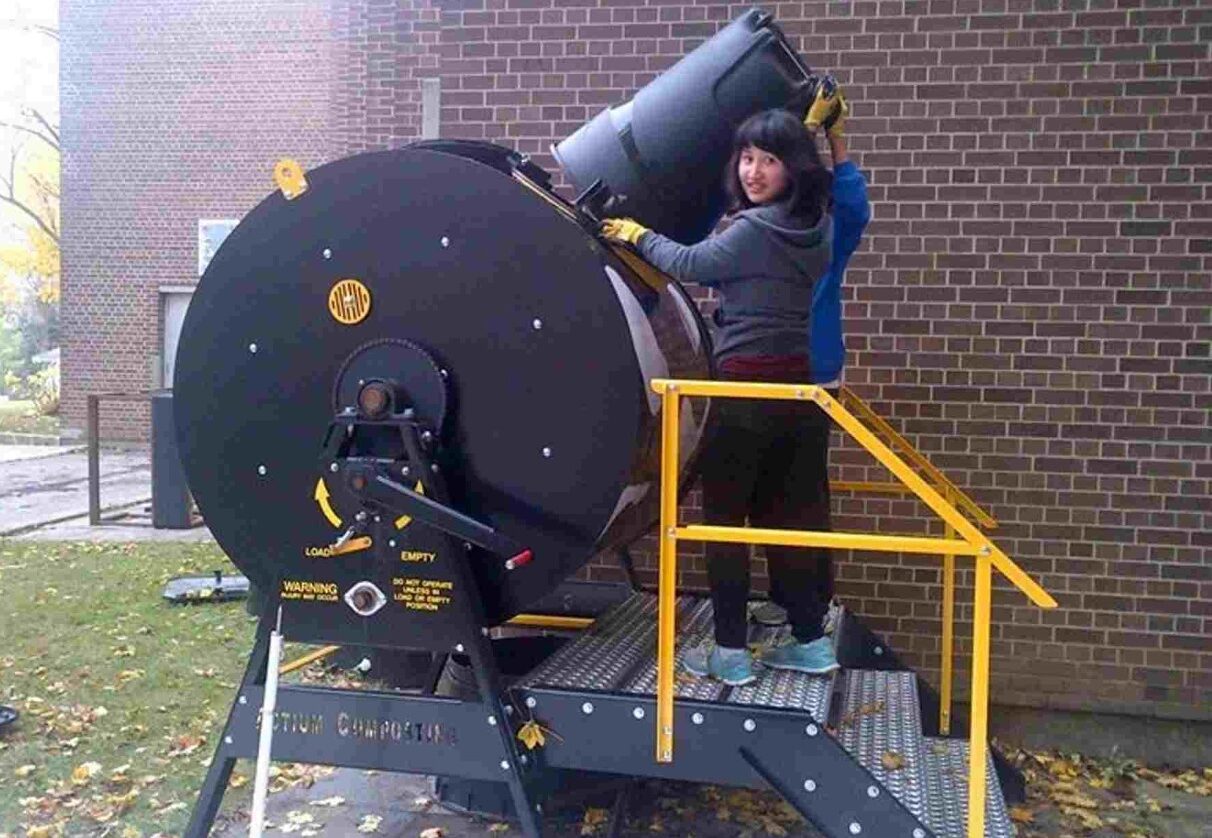
    When a class loads organic waste into a composter and cranks it for the first time, they’re not reading about decomposition. They’re managing it. They’re making decisions. They’re watching what happens when the carbon-to-nitrogen ratio is off, when moisture is too high, when the drum heats up and why that matters.

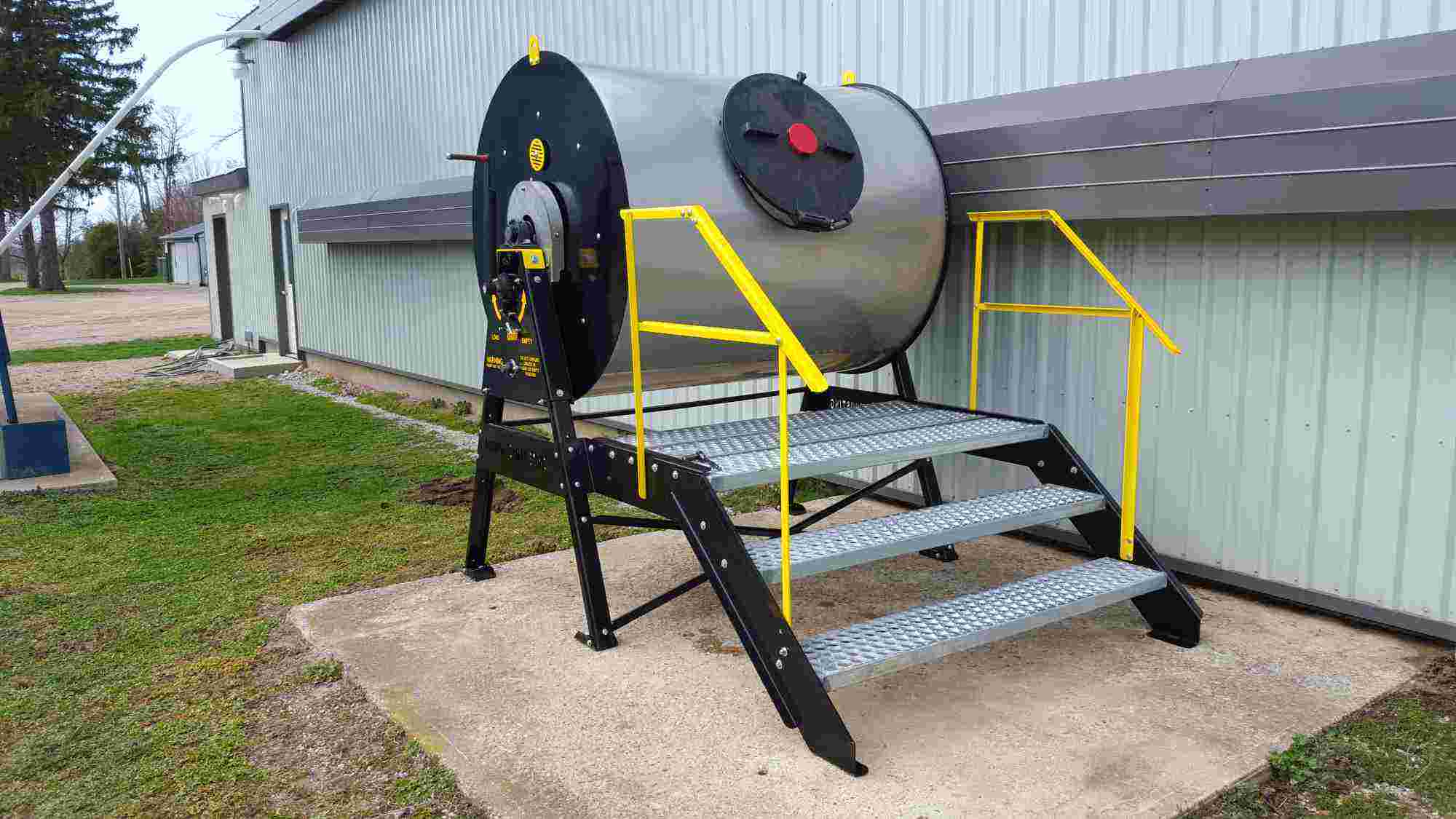
    The Essential Batch 45 commercial composter runs entirely on manual power โ€” no electricity required. That means students are physically involved in every turn. They feel the heat radiating from the drum. They track the temperature. They adjust. They observe.

    That’s not a worksheet. That’s science.


    The Carbon-to-Nitrogen Ratio: A Lesson That Runs All Semester

    One of the most powerful things about running a composter in an educational setting is that it teaches students about balance โ€” specifically the carbon-to-nitrogen ratio that drives decomposition.

    Too much nitrogen (food scraps, grass clippings) and the contents go anaerobic and smell. Too much carbon (cardboard, dry leaves) and decomposition slows to a crawl. Get it right โ€” roughly 25โ€“30 parts carbon to 1 part nitrogen โ€” and the drum heats up, microbes flourish, and finished compost appears in weeks.

    Students learn to read the drum. They adjust the inputs. They document what works and what doesn’t. Over a semester, they develop an intuitive understanding of nutrient cycles that no multiple choice test can measure.


    What Goes In. What Comes Out.

    Schools generate more organic waste than most people realize. Cafeteria scraps, paper towels, yard waste, food prep from culinary programs โ€” it adds up fast and most of it goes straight to landfill.

    A single Essential Batch 45 unit processes up to 500 pounds of organic material per week. Over a typical 28-week school year, that’s 14,000 pounds of organic material diverted from landfill โ€” from a single unit, on school property, operated entirely by students.

    That number isn’t theoretical. Rosebank Elementary in Nashville diverted 13,775 pounds of food waste in a single school year through their student-led composting program โ€” preventing 661 pounds of methane from entering the atmosphere and producing 4,500 pounds of finished compost for local farms and community gardens. Their story is documented here.

    The finished compost from your school can go to a school garden, a local farm, or a community green space. The nutrient loop closes right on school property.


    No Power. No Plumbing. No Complicated Installation.

    One of the practical barriers to bringing composting into schools is infrastructure. Most composting systems require electrical hookups, water lines, or specialized ventilation. The Essential Batch 45 needs none of these.

    It runs on a manual crank. It can be placed in a courtyard, a loading dock, a greenhouse, or any outdoor space with reasonable access. Setup takes hours, not weeks. And because there are no mechanical components to fail, ongoing maintenance is something students can handle themselves โ€” which is part of the point.


    Curriculum Connections Are Already There

    This isn’t a detour from the curriculum. It’s a hands-on delivery mechanism for concepts already in it.

    For science classes: decomposition, microbiology, chemistry of organic matter, nutrient cycling, ecosystem dynamics.

    For environmental studies: waste diversion, circular economy principles, carbon sequestration, soil health.

    For math classes: measuring inputs and outputs, calculating diversion rates, tracking temperature over time, analyzing data.

    For culinary and agriculture programs: food waste reduction, soil amendment quality, connection between kitchen waste and growing conditions.

    One composter. Multiple subject areas. A full semester of observable, documentable learning.


    It’s Already Been Done โ€” With Grant Money

    Here’s the part that usually surprises educators: schools that have done this haven’t always paid for it themselves.

    North Country School in New York received a NYSERDA grant to design and install a drum composting system. Their unit processes all food scraps into nutrient-rich compost in 28 days, with the finished material going directly back to campus garden beds โ€” closing the nutrient loop on school grounds.

    Mansfield Middle School in Connecticut launched a grant-funded composting program through the Connecticut Department of Environmental Protection that now diverts approximately 9,000 pounds of food waste per year from incineration. The program became such a model that the school authored a how-to manual adopted by schools across the state.

    In many Canadian and US jurisdictions, composting equipment for schools can be funded through federal green infrastructure grants, provincial sustainability programs, foundation grants, and school board environmental funds. We’ve built a grant finder tool at NutrientReturn.com that maps available funding by province and state โ€” many schools have accessed 50โ€“100% of their program costs through these sources.

    If budget is the reason this conversation hasn’t happened at your school yet, it may not be as much of a barrier as you think.


    Where to Start

    The best composting programs in schools started with one teacher who thought it was worth trying.

    If that’s you โ€” if you’re spending this summer planning what September looks like and you want something real for your students to work with โ€” we’d like to talk.

    Visit nutrientreturn.com to explore the equipment, use the grant finder, or reach out directly. We work with educators to make sure the program fits the space, the budget, and the curriculum before anything gets ordered.

    Your classroom could be closing the nutrient loop this fall.


    NutrientReturn supplies commercial composting equipment to schools, farms, restaurants, and institutions across Ontario, North America, and globally. No power required. Containerizable for delivery anywhere.
  • You’re Sitting on a Goldmine. It’s Currently Rotting in a Pile.

    You’re Sitting on a Goldmine. It’s Currently Rotting in a Pile.

    A note for poultry and cut flower farmers on what your organic waste is really worth โ€” and what it’s costing you to ignore it.


    Every flock cleanout leaves you with the same problem: a barn full of litter โ€” manure, bedding, feathers โ€” that needs to go somewhere. Every harvest cycle leaves cut flower growers with stems, rejected blooms, and green waste that piles up faster than it can be removed.

    For most operations, “somewhere” means hauling it off-site, stockpiling it until someone else deals with it, or spreading it raw and hoping for the best.

    None of those options are getting easier. And one of them is about to get a lot more expensive.


    The Regulatory Pressure Is Real and It’s Moving Fast

    Ontario’s packaging and organic waste regulations have been tightening steadily, and 2026 marks a significant shift. Under the province’s expanded Extended Producer Responsibility framework, businesses face increasing accountability for how organic waste is managed โ€” not just what gets recycled. For farms generating consistent volumes of organic material, the question of how that waste is handled is moving from a management inconvenience to a compliance issue.

    South of the border, it’s already a legal matter in several states. California’s SB 1383 mandates 75% diversion of organic waste from landfill. Washington State’s HB 1799 requires commercial food waste generators to separate and divert organic material. New York’s Food Waste Reduction Act is expanding its reach. These frameworks don’t stop at restaurant kitchens โ€” they apply to agricultural operations generating organic waste above threshold volumes.

    If your operation ships product into any of these markets, or if your provincial government is watching how neighbouring jurisdictions enforce, the direction of travel is clear.


    What Poultry Litter Is Actually Worth

    Poultry litter โ€” the combination of manure, bedding, and organic material from a flock โ€” is one of the most nutrient-dense organic materials that exists. It’s high in nitrogen, phosphorus, and potassium. When composted properly, it becomes a stable, predictable soil amendment with measurable agronomic value.

    The problem is “when composted properly.” Raw litter applied directly to land carries pathogen risk โ€” E. coli, Salmonella, and other organisms that require time and temperature to neutralize. It also carries ammonia volatilization risk, meaning the nitrogen you want in your soil escapes into the air before it does any work. And it can cause nutrient runoff issues that attract regulatory attention.

    Composted litter is a different product entirely. The composting process โ€” sustained temperatures above 55ยฐC for a minimum period โ€” neutralizes pathogens, stabilizes nitrogen so it’s available to plants rather than lost to the atmosphere, and reduces litter volume significantly. What you’re left with is a product you can apply to your own land, sell to neighbouring operations, or use to reduce synthetic fertilizer inputs.

    For a commercial poultry operation doing regular barn cleanouts, the volume of material going through a properly managed on-site composter can represent thousands of dollars in fertilizer value annually โ€” value that currently either walks out the gate on a hauler’s truck or gets spread raw and underperforms.


    What Cut Flower Growers Are Throwing Away

    The economics for cut flower operations are different but the principle is the same.

    A working cut flower farm generates substantial green waste: rejected stems, spent blooms, end-of-season plant material, and crop residues. This material is high in organic matter and, when composted, produces exactly the kind of biologically active soil amendment that intensive flower production requires.

    Flower growers are often already spending significantly on compost inputs โ€” bagged or bulk amendments to maintain soil structure and fertility through repeated cropping cycles. On-site composting closes that loop. The waste your operation generates in one part of the cycle becomes the input it needs in the next.

    There’s also a practical benefit that matters at scale: reducing haul-away costs. Green waste removal for a mid-sized cut flower operation can run hundreds to thousands of dollars per season depending on volume and location. Processing it on-site converts that cost into an asset.


    Why “I’ll Just Windrow It” Isn’t Enough

    Windrow composting โ€” building long piles and turning them with equipment โ€” works at large scale but creates problems at farm scale. It requires space, equipment, and management time. Open windrows can create odour issues that attract complaints from neighbours or scrutiny from environmental officers. And without temperature monitoring and proper turning, pathogen kill isn’t guaranteed, which matters if you’re applying the compost to land where food or flowers are grown.

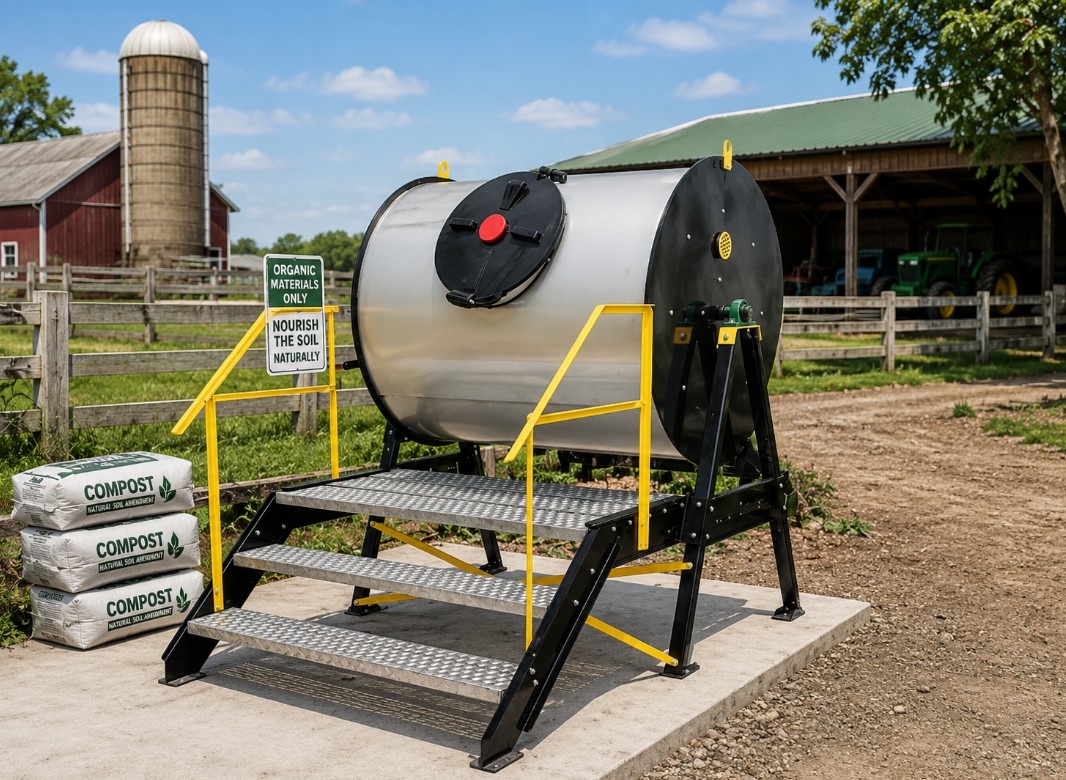
    Batch composting in an enclosed unit solves the problems windrow systems create. The process is contained, temperature is managed by the batch environment rather than by the weather, and the footprint is small enough to fit in an existing outbuilding or alongside a barn. No electricity required. No specialized training.

    For an operation that’s doing a barn cleanout every six to eight weeks, or harvesting green waste continuously through a growing season, a batch composter processes material in manageable cycles and produces a finished product on a predictable timeline.


    The Compliance Angle You Shouldn’t Wait On

    Here’s what’s worth understanding about agricultural organic waste regulation: it tends to follow the same trajectory as food service regulation did a decade ago. First comes voluntary guidance. Then comes municipal or regional requirements. Then comes provincial or state-level enforcement.

    Restaurants in Ontario and California didn’t get fined on day one of organic waste regulations โ€” but the operations that set up compliant systems early avoided scrambling when enforcement arrived and avoided the cost of reactive compliance.

    For poultry and flower operations, the window to get ahead of this is open now. On-site composting is a defensible, documented approach to organic waste diversion. It creates a paper trail that shows regulators you’re managing waste responsibly. And it does so while generating value rather than incurring cost.


    What to Do Next

    If you’re generating organic waste at scale โ€” whether that’s poultry litter from a commercial flock or green waste from a cut flower operation โ€” there are two useful things to do right now.

    First, check your jurisdiction’s current requirements. Our Compliance Hub covers organic waste regulations across Ontario and major US states, including the thresholds that trigger mandatory diversion requirements and the documentation needed to demonstrate compliance.

    Second, find out what on-site composting would actually cost and return for your specific operation. The numbers depend on your waste volume, your current disposal costs, and the fertilizer value of the compost you’d produce. We run those numbers for free.

    Get a quote and ROI analysis โ†’


    NutrientReturn.com connects Canadian and US agricultural operations with commercial composting equipment sized for farm-scale organic waste. No electricity required. Shipped anywhere.